
Home » Public Works » Streets and Forestry » Snow and Ice Removal
The City of Lakewood’s snow and ice control efforts promote safe vehicular travel during the winter months. The City attempts safe passage on all city streets at all times. However, keep in mind that each snowfall presents different conditions that impact the snow and ice removal process, such as the rate and accumulation of snowfall, moisture content, temperature, time of day or night, wind direction and speed and the duration of the storm, with the result that no two storms are ever identical.
The City of Lakewood is responsible for snow and ice control for a total of 228 lane miles (i.e. Clifton Blvd. has six lanes plus one turn lane = 22 total miles).
Public parking lots and facilities will be treated as necessary depending on operational schedules for the use of such facilities.
 Property Owner Responsibilities
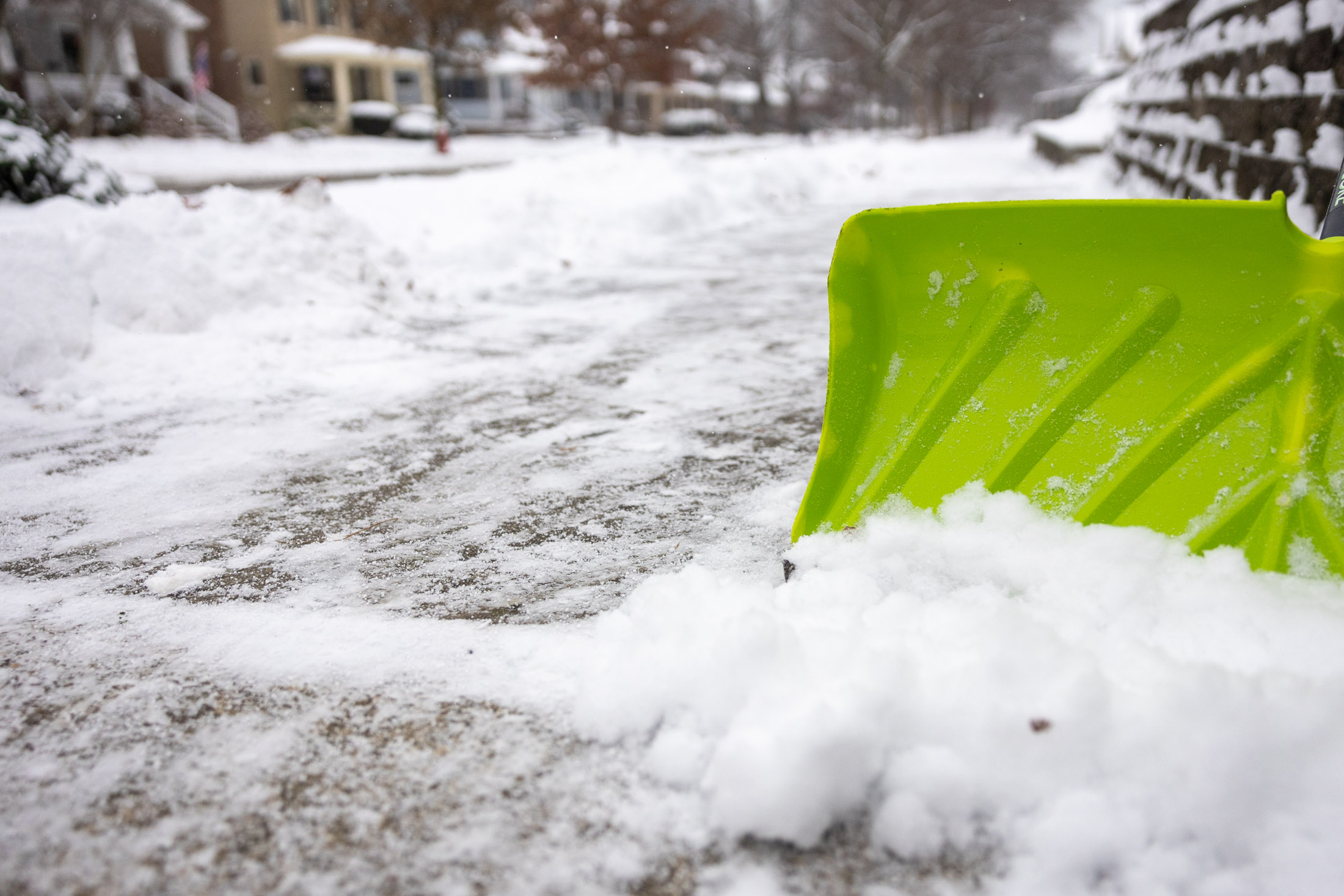
When snow falls and accumulates, residents, business owners, and property owners are responsible for the removal of snow and ice from adjacent sidewalks within 24 hours after a snowfall per City Ordinance 521.06. Removing snow and ice keeps our neighbors safe and helps Lakewood to be a year-round walkable community.
When snow accumulations reach 4 inches or higher, snow parking bans go into effect. Parked vehicles must be moved off of the street to allow snow plows room to clear the roads.
When there is a heavy snowfall, the Lakewood Police Department will ticket snowed-in autos on all city streets. Tickets and tow notices will be placed on each vehicle. If the cars are still parked on the street without being moved 24 hours after the ticket and notice are placed on the vehicle, an attempt will be made to notify the registered owner. After the notification attempt is made, the auto may be towed off the street.
More information about the 24 hour parking violation can be found in Lakewood Codified Ordinance Section 351.18.
During a snow event, residents without other parking, may park for free in the municipal parking lots. Click the link below for a map of the available parking lots.
Lakewood Codified Ordinance 351.26 contains the provisions of the emergency snow parking bans.
Streets are treated and plowed based on three categories of route priorities: primary, secondary, and residential. All routes are treated by priority beginning with primary, then secondary, and finally residential.
Road salt use in the City of Lakewood is necessary to ensure safe travel during and after winter storm events, but all that salt has to go somewhere. After road salt dissolves, it gets carried away via runoff and deposited into both surface water (Lake Erie and the Rocky River) and the groundwater under our feet. Also, the cost of road salt continues to climb.
Consider how easily salt can corrode your car. Unsurprisingly, it’s also a problem for the surrounding environment – so much that in 2010, Canada listed road salt as a known toxin and placed new guidelines on its use. The States of Vermont, Massachusetts and New York have followed suit within the past few years. Excessive salt use comes at a significant environmental and economic cost and is getting to be a bigger problem than ever.
Data from long-term studies of watersheds in the State of New York bear this out. A group of scientists that tracked salt levels from 1952 to 1998 and found that concentrations of sodium and chloride increased by 130 and 243 percent in several locations spread across the state with significant annual increases and road salting to blame for an estimated 91 percent of sodium chloride in the watershed.
Nationwide, over 40% of urban lakes, rivers and streams have chloride levels that exceed safe guidelines for aquatic life, largely because of road salt – this includes the Rocky River Watershed. In addition, there is a correlation between salt use and the damage to trees and vegetation. Salt deposits unto tree lawns can stunt the growth of certain trees, creates poor soil conditions for optimum tree health and can – in extreme cases – advance decay within the root systems of large mature trees, thereby creating a hazard and premature loss of tree canopy. Salt spray on heavy traveled roads can travel as far as 500 feet in concentrations high enough to kill vegetation and create poor soil conditions. Road salt kills certain species of trees and places limitations on what tree species we can plant on certain streets.
How can we avoid polluting our waterways, avoid killing trees, and control costs? The City of Lakewood has a strategy to both reduce the use of road salt and still provide safe passage of vehicle traffic through our city.
We reduce to use of road salt as follows:
In removing the snow and ice, the City responds first to all main roads, bridges, hills and secondary main roads which must be kept passable to provide a safe transportation network to the largest volume of people. Once these areas are in passable condition, crews head to clear the residential side streets.
On residential side streets, the plow blade has “guards” that keep the blade just a fraction above the roadway surface. This is done to prevent damage to vehicles and equipment and help limit the damage to the asphalt and concrete road surface and damage to other infrastructure such as manholes, catch basins or water valves. Streets with low traffic volumes may remain snow covered longer.
Salt is not very effective during heavy snow fall on side streets due to the low traffic volume needed to help activate the melting agents in road salt. Salt will be applied on side streets when the snowfall has slowed or stopped and when conditions exist that will make it effective or necessary
Salt applied on side streets with low vehicle traffic and during the course of active snow fall will get plowed out of the streets and onto tree lawns, thereby squandering the use of the costly resource and the time, labor and equipment spent and used to deliver it. Salt is always applied within approximately 100 feet of all side street intersections and on all hills when side streets are plowed.
There are approximately 15,000 driveway aprons in the City. The time and cost to clean all the driveway aprons is prohibitive
Snow may not be pushed or blown into the street from private property, nor may it be pushed onto your neighbor’s property. Please remind your snow plow service that they are not permitted to push snow onto the street or onto property that it did not fall upon.
According to City of Lakewood Ordinance 521.06, property owners are responsible for keeping the sidewalks clear of debris as well as snow and ice within 24 hours of a snowfall.
We do salt side streets on a limited basis as conditions warrant. Excessive road salt usage is costly, has a negative environmental effect, and reduces the longevity of the road surface.
For more information, see our Salt Reduction Strategy.