Lakewood Interceptor Project

Project Overview

The Lakewood Interceptor Project is a key element of the City of Lakewood’s Clean Water Lakewood program. This initiative focuses on modernizing our sewer system to protect the natural environment and ensure compliance with the federal Clean Water Act.

The Role of the Interceptor

The project involves relining the large, combined sewer interceptor that transports waste from the street-level collection system across most of the city to the Lakewood Wastewater Treatment Plant. Once there, flow is treated to meet rigid environmental standards before being safely released into Lake Erie.

While it has been maintained over the years, the Lakewood Interceptor Tunnel has reached the end of its useful life. Portions of it still perform well, while many others create constant challenges for the professionals who operate our wastewater treatment system. The cost of constant ongoing repairs is significant, so modernization is necessary. 

Addressing Infrastructure Challenges

Our current combined sewer design was standard a century ago and successfully transports waste under normal conditions. However, during heavy rain or snowmelt, the system was originally designed to overflow untreated waste mixed with stormwater into the environment. This project aims to mitigate those overflows and prevent pollution in our community waters.
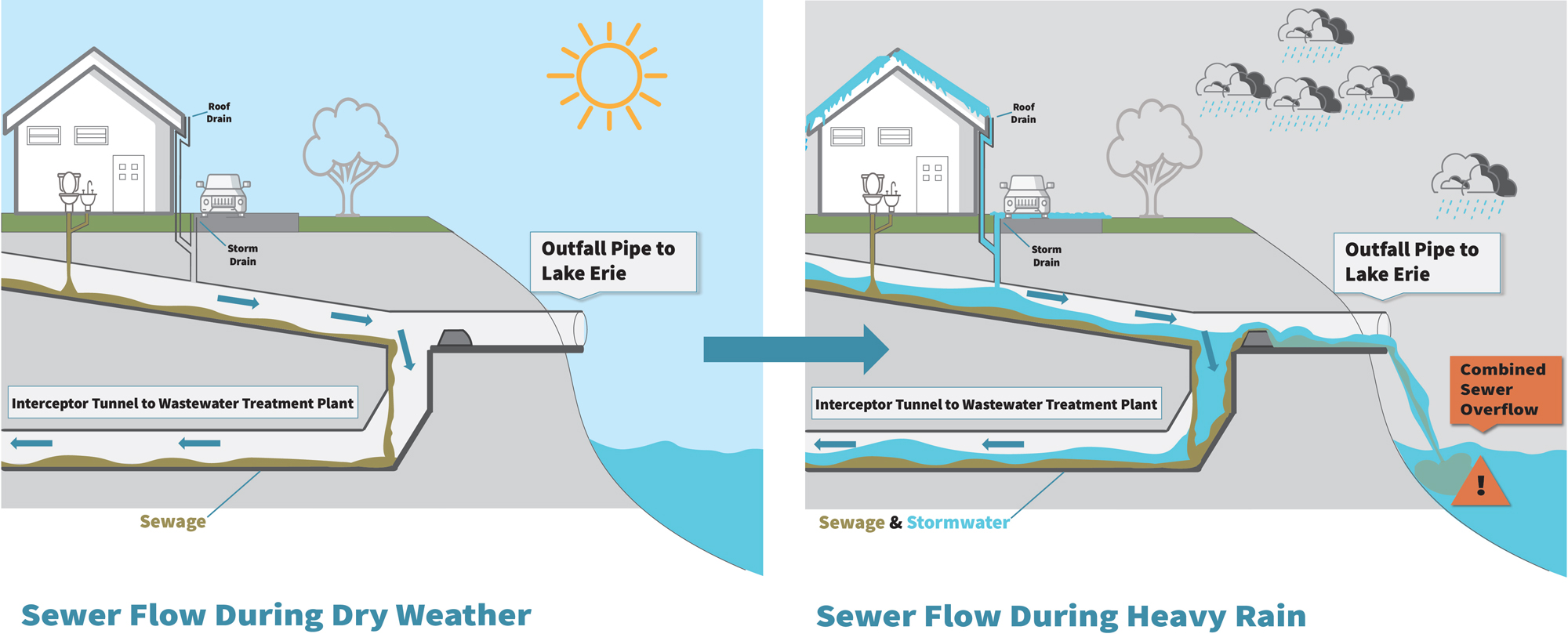
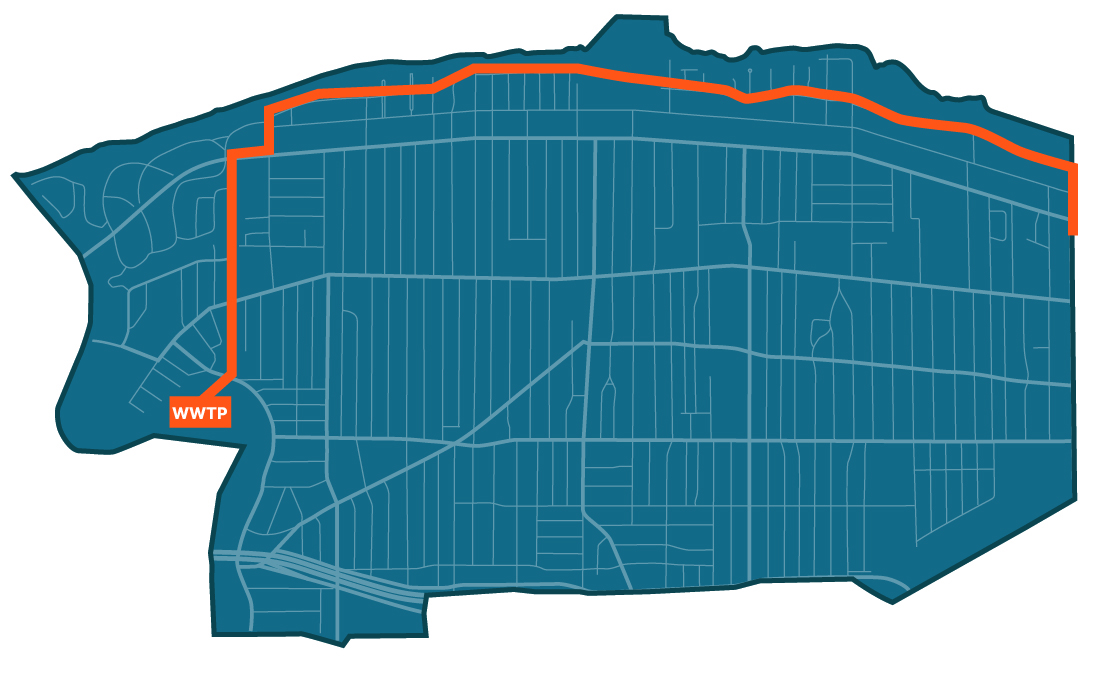
Diagram showing a combined sewer system like Lakewood's where, on dry days, sewage flows to the wastewater treatment plant. On rainy days, an excess of water can cause the sewage to rise up to the level where it combines with storm water and flows into a waterway.

Scope of Work and Location

Map of Lakewood streets with the Interceptor route/location highlighted in Orange. The Interceptor runs along Edgewater Drive and the area between Lake Avenue and the shoreline, then south down West Clifton to the Wastewater Treatment Plant.The interceptor tunnel serves as the backbone of the city’s sewer system. It is buried beneath Edgewater Drive (starting at West 117th Street), running west before turning south under West Clifton toward the treatment plant.

Construction will involve:

  • Rebuilding existing vertical access points.
  • Creating new access shafts (all located within the existing right-of-way).
  • Utilization of large equipment and significant material transport.

Traffic and Property Impact

While we do not anticipate needing access to private property, work zones will require lane shifts and traffic reconfigurations. The city will contact impacted areas and property owners directly to provide specific updates as the project progresses.

A Commitment to the Future

The Interceptor Tunnel Rehabilitation Project represents a critical step in Lakewood’s sustained reinvestment in 21st-century infrastructure renewal.

Videos

Interceptor Project FAQs and Information

What does rehabilitation involve?

In 2022, engineers and technicians started work on cleaning, televising, and gathering profiles of the interceptor to inform engineering and design work. Through this analysis, they are recommending a variety of innovative methods to rehabilitate the structure. 

Gone are the days when miles of deep trenching – and incredible levels of disruption – were required to install and repair lines like these. Today, engineers and contractors anticipate being able to do much of the work below ground, accessing the structure from a dozen vertical access points. Through a process called slip lining and other modern techniques, the tunnel will serve Lakewood residents well for the next 100 years. 

Vertical access points are being identified all along the interceptor, and in all cases will be situated within the existing right-of-way. We do not anticipate needing access to private property, but work areas will require lane shifts and other traffic configuration adjustments. Street parking in the area may be impacted when lane shifts and traffic configurations are modified, and there will be instances where pedestrian detours will be put into place. Work areas will be secured for public safety using concrete barriers and fencing. 

In some areas, things may smell a little bit different because shafts will be opened. BMPs will be used to minimize odors as much as is practicable. The smell is not harmful to the people around it. By and large, we do not anticipate changing access to the area or the operations of daily life.  

Access points will typically be 30 feet by 100 feet, with 20-foot in-diameter access shafts within that footprint. These points will be finalized before construction begins in 2023.  

The contractor will use best management practices to minimize odors as much as practicable. Work areas will be secured for public safety using concrete barriers and fencing. 

Each access point will have a site-specific plan with mitigation efforts to minimize inconvenience. Emergency services, snow plowing, busing, waste hauling, deliveries, mail service, etc., will be carefully coordinated to minimize disruptions.  

A significant component of this project is a comprehensive effort to keep neighbors informed so those impacted by construction will receive advance notice and detailed information about temporary changes to their neighborhood. 

The total project costs are approximately $29 million; mostly funded by American Rescue Plan and Ohio Public Works commission funding.
Contact the City Engineer, Mark Papke, at 216.529.6807 or via email at mark.papke@lakewoodoh.gov, and look for regular project information and updates across the city’s social media channels.